
Ultimate Guide to Worship Guitar Tone Part 4:

- Overdrive & Distortion
- Volume/EXP Pedals
- Compression Pedals
- Do you really need all of these individual effects?
- Distortion & Drive Pedals
- Ultimate Guide to Atmospheric Guitar Tone: Part 5
- Ultimate Guide to Atmospheric Guitar Tone: Part 3
- Ultimate Guide to Atmospheric Guitar Tone: Part 2
- Ultimate Guide to Atmospheric Guitar Tone: Part 1
- Best Multi FX Pedals Modelers for Atomspheric Guitar Tone ( 2021 )
Overdrive & Distortion


Overdrive/Distortion Pedals are responsible for one thing. Making your amp sound like it is on full blast, therefore causing your tone to distort/break up. With the advent of amp attenuators though, you can do this without the pedal, and without blowing your audience away.
I do not like to use overdrive/dist pedals for this unless its absolutely necessary. They are just a cheap imitation when compared to the real deal. I much prefer getting my distortion straight from the amp.
Worship Guitar tone doesn’t get too heavy, but it still uses drive and distortion. Some guys like to to add overdrive in stages( gain staging) one pedal at a time. This way you get a layering effect of overdrive tones starting with slightly dirty, working your way up to fully overdriven, higher gain lead tone.
Personally, since I use the HD500X, my DSP(digital signal processor) power is limited, and gain staging takes up too much space. Plus I can get way better high gain tones just by using the amp models drive settings. If you have a solid state amp, you’ll already have a built in attenuator, so distortion is readily available.
Volume/EXP Pedals
Volume Pedals


Volume pedals not only give you a floor level volume control, but they can also be used for something called a “swell”. I believe the “Swell” technique was borrowed from lap steel/steel guitar players.
You basically strum a triad or single note with the volume off, then quickly rock the volume pedal forward. This results in a swell of sound without the attack of the guitar pick. Another way to make your guitar not sound like a guitar. This is a vital part of the Worship Guitar Tone.
EXP (Expression) Pedals


EXP pedals are similar to Volume pedals, but can control any parameter of any effect you have (including volume). They can only be used with equipment (pedalboards) specifically designed for them.
EXP or Expression pedals can be programmed to control Amp Gain, Reverb Decay, Volume, Wah, Delay Timing, and the list goes on. These are mostly used in conjunction with a multi-fx pedalboard or amp modelers.
Compression Pedals
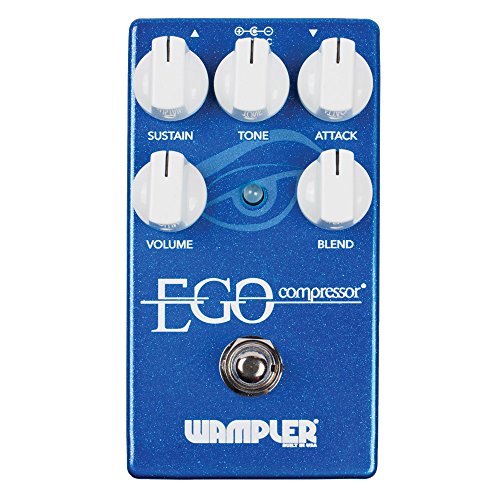


What is Compression?
Guitar Compressor Pedals squeeze your guitar signal. It limits the frequencies of your signal, and adds sustain so your notes ring out much longer. Comp pedals can enhance your clean tone greatly, and I use them myself. That being said, if you don’t have a big budget don’t worry. I have not found them to be absolutely essential. Thats why comps are so far down this list.
If you still aren’t sure about the concept of compression, and what it does for your guitar tone, here is a better explaination from Scott Marquart of Stringjoy.com.
“Compression is a subtle effect, especially when compared to a distortion, delay, or a phase shifter—which is often why it gets overlooked, especially by beginner or intermediate guitarists. Nevertheless, a compressor pedal, when used properly, can shape and enhance your guitar tone in some rather significant ways. Today, we’re going to look into what a compressor pedal can do for your guitar.


A more balanced sound, a beefy tone, and more sustain are what makes compressor pedals appealing to guitarists. Compression is used in the recording studio to control the dynamics and overall level of the audio signal. Sound engineers use it to make the louder parts of audio signals quieter and the quiet parts louder, resulting in a more balanced sound. In addition to balancing the sound, compression fattens up the tone and provides more sustain—and if you’re like most guitarists, both of those things sound pretty great…“
Do you really need all of these individual effects?
All of these fx pedals are great, if you can afford them. It can take a long time to piece together your ideal pedalboard one purchase at a time. Sometimes I find it’s simpler to go with a multi-effect unit. So, if you’ve got a smaller budget, and not a lot of time to test individual fx, then you’ll probably want to go with a multi-fx pedal.
Good examples include: Line 6 HX Effects (For Multi-FX) or (Line 6 Helix, HD500X, Fractal Audio AX8, Kemper Profiler, etc (For All-In-One Units).
HOMEWORK
Distortion & Drive Pedals
Overdrive Flavors
Volume & Expression Pedals
Compression Pedals
Worship Guitars with Great Tone:
- D’Angelico (DAPBEDBWMSTCTR)
- Gretsch Guitars G5135 Electromatic
- Reverend Double Agent OG
- Schecter Solo-6B Solid-Body w/ Bigsby
- PRS S2 Standard 24 Satin
- Schecter Ultra III w/ Bigsby
- Reverend Jetstream 390
- PRS SE Zach Myers
- Fender Classic Series ’72 Telecaster Deluxe
- Fender Alternate Reality Meteora
- Fender Vintera ’60s Jazzmaster
- Fender Classic Player Jaguar Special
- Schecter Guitar Research PT Fastback IIB with Bigsby
- Fender Deluxe Tele Thinline

Ultimate Guide to Atmospheric Guitar Tone: Part 5
These are easily overlooked effects that can really add that...
Read More

Ultimate Guide to Atmospheric Guitar Tone: Part 3
First off, lets address the whole single fx pedals vs...
Read More
Ultimate Guide to Atmospheric Guitar Tone: Part 2
It starts with choosing or modifying the right guitar. If...
Read More
Ultimate Guide to Atmospheric Guitar Tone: Part 1
Praise & Worship Guitar fills in the guitar shaped space...
Read More
Best Multi FX Pedals Modelers for Atomspheric Guitar Tone ( 2021 )
Best Guitar Multi Effects Pedals & Amp Modelers for Guitarists...
Read MoreWhat is a Distortion or Overdrive Pedal?
Overdrive/Distortion Pedals are responsible for one thing. Making your amp sound like it is on full blast, therefore causing your tone to distort/break up. With the advent of amp attenuators though, you can do this without the pedal, and without blowing your audience away.
What is an EXP Pedal?
EXP pedals are similar to Volume pedals, but can control any parameter of any effect you have (including volume). They can only be used with equipment (pedalboards) specifically designed for them.
EXP or Expression pedals can be programmed to control Amp Gain, Reverb Decay, Volume, Wah, Delay Timing, and the list goes on. These are mostly used in conjunction with a multi-fx pedalboard or amp modelers.
What is a Compression Pedal?
Guitar Compressor Pedals squeeze your guitar signal. It limits the frequencies of your signal, and adds sustain so your notes ring out much longer. Comp pedals can enhance your guitar tone greatly, and I use them myself. That being said, if you don't have a big budget don't worry. I have not found them to be absolutely essential. Thats why comps are so far down this list.
What is "Worship Guitar"?
“Worship Guitar” is a niche or style of guitar playing. Many churches have a Praise & Worship Team that leads the congregation in songs, almost like a live concert. There are usually two to three guitarists in any one team. (Along with Bass, Drums, Keyboard/Synth, Vocals, etc.)
What is the best electric guitar for worship music?
The short answer is, the one you like to play. However there is a short list of guitars that sound amazing and are particularly well suited to the Worship Genre.
5. Gretsch Double Jet (w/ Bigsby)
4. G&L Doheny or Fender Offset (Jaguar, Jazzmaster, Mustang)
3. G&L ASAT or Fender Telecaster
2. Veritas Mini Master
1. Veritas Portlander (Used by all guitarists of Bethel Music)
